When King Charles III steps onto American soil for his state visit, he continues a tradition nearly a century in the making. His arrival, captured in crisp press photos and candid moments, adds another frame to a visual archive stretching back to the 1930s. These images aren’t just ceremonial snapshots—they’re political statements, cultural bridges, and public relations milestones.
Photographs of British royals in the United States do more than document events. They reveal shifts in transatlantic diplomacy, changing media landscapes, and the evolving role of monarchy in a modern democracy. From wartime solidarity to Cold War symbolism, royal visits have mirrored the ebb and flow of U.S.-UK relations.
Today’s audiences see these moments through curated social media feeds and live streams, but the power of a well-composed image remains unchanged. Let’s trace this visual legacy—from the first royal couple to tour America in crisis, to Charles’s modern-day balancing act between tradition and relevance.
The First Royal Footprint: King George VI and the 1939 Tour
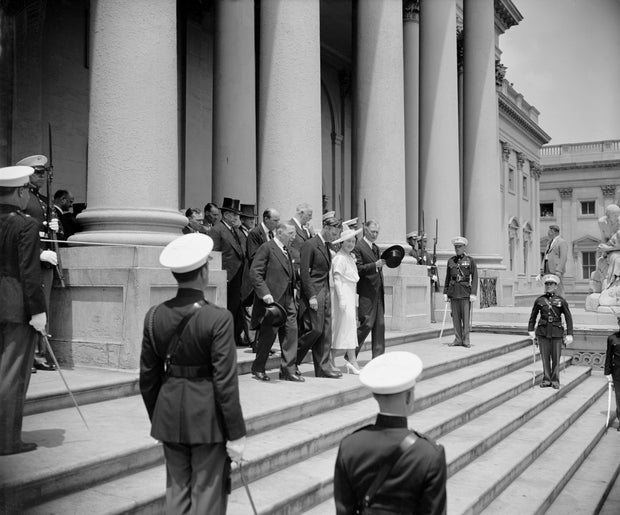
In June 1939, King George VI and Queen Elizabeth (later the Queen Mother) became the first reigning British monarchs to visit the United States. Their trip was a high-stakes diplomatic mission. Europe teetered on the brink of war, and Britain needed American support.
Photographs from that tour are striking in their intimacy. One iconic image shows the king and president Franklin D. Roosevelt sharing a picnic at Hyde Park, bareheaded and drinking coffee from tin cups. The scene—staged yet effective—was meant to convey equality and friendship between two leaders, and by extension, two nations.
The media strategy was revolutionary for its time. Photographers followed the royals closely, capturing unguarded moments: the king waving from open cars, the queen smiling at children lining the streets. These images softened the monarchy’s reserved image and built American empathy.
The visit succeeded politically. Though the U.S. remained officially neutral, public sentiment began shifting toward intervention. The photos, widely published in Life and The New York Times, played a key role in humanizing the British Crown.
Queen Elizabeth II: A Reign Documented in America
No royal has visited the United States more than Queen Elizabeth II. Over seven decades, she made 26 official trips, each one adding to a vast photographic record of royal diplomacy.
Her first visit in 1957, shortly after her coronation, was steeped in Cold War symbolism. Images of her addressing a joint session of Congress—regal in a pink Dior dress—contrasted sharply with Soviet repression in Eastern Europe. The message was clear: democracy and tradition could coexist.
Later visits reflected both continuity and change. In 1976, during the U.S. bicentennial, she toured Boston, Philadelphia, and New York. Photos from this trip show her on an open-top carriage, greeting American revolutionaries’ descendants with a smile. The irony wasn’t lost on observers—but the diplomacy worked.
By the 1990s, the media environment had shifted. Paparazzi culture grew, and royal images were no longer controlled solely by official photographers. A 1991 visit during the Gulf War saw her at Fort Hood, Texas, comforting British troops. The resulting photos were somber, focused on duty over glamour.
Elizabeth’s final U.S. visit in 2011 was more subdued. She met President Barack Obama at a state dinner, where images of her laughing at Michelle Obama’s jokes went viral. It was a rare glimpse of informality—a reminder that even the most ceremonial of figures could connect on a human level.
Prince Charles Before the Crown: Building a Legacy
:max_bytes(150000):strip_icc():focal(728x275:730x277)/princess-catherine-prince-william-donald-trump-king-charles-iii-trump-state-visit-uk-windsor-091725-8672599a27214b6f8ffdbb07fd7596e4.jpg)
Long before becoming king, Charles was the monarchy’s most frequent U.S. envoy. Between the 1970s and 2020, he visited more than 20 times, often promoting environmental causes or military charities.
Photographs of a young Charles in the 1970s show a prince struggling to define his role. In a 1975 trip to Virginia, he’s seen inspecting military cadets, stiff and formal. By the 1980s, images grow warmer—particularly during visits with Diana, Princess of Wales. Their 1985 trip, including a White House dinner where they danced, produced some of the most iconic royal photos in American memory.
But not all images were favorable. Paparazzi shots of Charles during his marital breakdown—tense, isolated—circulated widely in U.S. tabloids. His 1994 visit, shortly after his televised confession of adultery, drew muted public response. Photos from that trip show a man under pressure, his smile rarely reaching his eyes.
Still, Charles used visuals strategically. In 2005, he visited New Orleans post-Katrina, touring damaged neighborhoods. Images of him speaking with survivors helped rebuild his image as a compassionate figure. His U.S. appearances increasingly focused on climate change, with speeches backed by stark environmental photography.
William and Catherine: The Next Generation Steps In
The Duke and Duchess of Cambridge made their first joint U.S. visit in 2011, just months after their wedding. The trip was a public relations triumph, blending charm with diplomacy.
Photos of Catherine in a red Alexander McQueen coat walking through Capitol Hill or laughing with children in New York captured global attention. Unlike earlier royal tours, this one unfolded in real-time on Twitter and Instagram. The couple’s social media team released high-resolution images within hours, controlling the narrative.
Their 2014 visit to New York included a tribute to 9/11 victims, photographed in solemn black. The image of William laying a wreath at Ground Zero was widely shared, reinforcing the UK’s solidarity with the U.S.
More recently, their 2022 Earthshot Prize event in Boston was heavily visual. Drone shots of the awards ceremony, behind-the-scenes reels of the couple meeting activists—these weren’t just event coverage. They were branding exercises, positioning William and Catherine as modern, mission-driven royals.
King Charles III’s State Visit: Tradition Meets Modernity
Charles’s first state visit as king arrives at a delicate moment. The monarchy faces scrutiny over cost, relevance, and legacy. In the U.S., public interest in royals remains high—but so does skepticism.
Photographs from this visit will carry extra weight. Every handshake, speech, and public appearance will be analyzed not just for diplomatic substance, but for symbolic nuance.
Expect tightly managed visuals: Charles addressing Congress, perhaps, or visiting a renewable energy project to highlight his environmental advocacy. Camilla, now queen consort, will be beside him—her presence a quiet statement of royal evolution.
Unlike past visits, this one will be documented across platforms. The Royal Family’s YouTube channel may stream segments. TikTok clips could show Charles joking with young climate activists. The goal is clear: to present a monarchy that’s still grand, but also adaptable.
One risk? Overproduction. When every moment is staged for digital consumption, authenticity erodes. The most powerful royal photos have always been the unplanned ones—the king laughing, the queen wiping a tear. If this visit delivers even one such moment, it will resonate far beyond the news cycle.
The Power of a Single Image
Few realize how much effort goes into royal photography. Each shot is vetted for composition, lighting, and context. Behind the scenes, royal staff coordinate with U.S. agencies, media pools, and security teams to control access.

Yet sometimes, the most effective images are the simplest. Consider Queen Elizabeth II in 2007, laying a wreath at the 9/11 memorial. No speech, no fanfare—just a quiet gesture, captured in black and white. That photo became a symbol of enduring alliance.
Or think of Prince Harry in 2013, playing wheelchair basketball with wounded veterans at Fort Belvoir. The image humanized both the royal and the cause, proving that optics matter most when they reflect real engagement.
These moments work because they feel genuine. In an age of deepfakes and filters, authenticity is the rarest royal asset.
What These Photos Reveal About Diplomacy
Royal visits are soft power in motion. They don’t sign treaties, but they build trust. And photographs are their most effective export.
When a British monarch smiles with an American president, it reassures investors, comforts allies, and signals stability. When a royal visits a school or disaster zone, it draws attention to causes that might otherwise go unnoticed.
But there’s a limit to what images can do. No photo can mask deep political disagreements—over Brexit, Ukraine, or trade policy. And as younger generations question monarchy itself, even the best-composed shot may not sway minds.
Still, in moments of crisis, these visuals regain their power. After 9/11, footage of the royal family observing a minute of silence at Buckingham Palace comforted many Americans. During the pandemic, Elizabeth’s recorded address—backed by wartime imagery—evoked shared resilience.
The lesson? Photos of royal visits work best when they tap into shared history, not just spectacle.
The Road Ahead: Royal Images in a Digital Age
As King Charles III continues his reign, his U.S. appearances will be judged not just by diplomats, but by influencers and algorithms. A state visit is no longer just a diplomatic event—it’s content.
Future trips will likely embrace immersive formats: virtual tours of royal conservation projects, live Q&As with American students, or augmented reality exhibits tracing royal visits through history.
But the core challenge remains: balancing tradition with transparency. Audiences want grandeur, but they also want genuineness. The royals who master that balance—through moments caught, not staged—will define the next chapter of this transatlantic story.
For now, as new photos emerge from Charles’s state visit, they’ll be measured against decades of precedent. Each frame adds to a legacy—not just of monarchy, but of how nations choose to see each other.
Act now: Follow the Royal Family’s official channels for real-time updates and high-res images from King Charles III’s U.S. visit. Compare today’s moments with historical archives to spot the subtle shifts in diplomacy, dress, and demeanor.
FAQ
Why are royal visits to the U.S. photographed so extensively? Royal visits are global media events. Photos serve diplomatic, public relations, and historical purposes, shaping how the monarchy is perceived abroad.
How many times did Queen Elizabeth II visit the U.S.? She made 26 official visits between 1957 and 2011, more than any other British monarch.
Did King Charles visit the U.S. before becoming king? Yes—he visited over 20 times, promoting environmental causes, military charities, and cultural ties.
What was the significance of the 1939 royal visit? It was the first by a reigning British monarch and helped build U.S. support before World War II.
How has royal photography changed over time? It’s shifted from controlled press shots to real-time digital content, with greater emphasis on authenticity and social media reach.
Are royal state visits taxpayer-funded? In the UK, the Sovereign Grant covers some costs, but host nations often share expenses for security and logistics.
What role does the U.S. First Lady play during royal visits? She typically hosts events, accompanies the queen or queen consort, and helps shape the cultural and social tone of the visit.
FAQ
What should you look for in Royal Diplomacy in Focus: British Monarchs in the U.S? Focus on relevance, practical value, and how well the solution matches real user intent.
Is Royal Diplomacy in Focus: British Monarchs in the U.S suitable for beginners? That depends on the workflow, but a clear step-by-step approach usually makes it easier to start.
How do you compare options around Royal Diplomacy in Focus: British Monarchs in the U.S? Compare features, trust signals, limitations, pricing, and ease of implementation.
What mistakes should you avoid? Avoid generic choices, weak validation, and decisions based only on marketing claims.
What is the next best step? Shortlist the most relevant options, validate them quickly, and refine from real-world results.