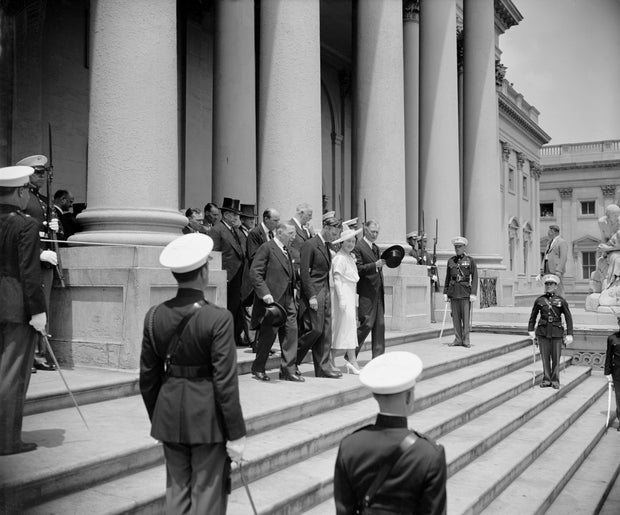
Photographs don’t just capture faces—they document diplomacy, cultural exchange, and the quiet weight of history unfolding in real time. When British royals step onto American soil, the moment is never just ceremonial. It’s symbolic, layered with centuries of shared language, war, alliance, and tension. As King Charles III embarks on a state visit to the United States, a visual journey through past royal trips reveals how these moments have shaped transatlantic perception—through smiles, salutes, and the occasional awkward handshake.
These aren’t just photo ops. They’re carefully choreographed acts of soft power, where a wave from a balcony or a toast at a White House dinner carries diplomatic resonance. From Prince Albert’s early 20th-century goodwill tour to Queen Elizabeth II’s record-setting visits, each image tells a story of alliance and adaptation.
The First Royal Footprint: Prince Albert’s 1919 Visit
Long before Buckingham Palace was a global brand, royal visits were rare and carefully calculated. The first major British royal to set foot in the U.S. with diplomatic intent was Prince Albert, later King George VI—the father of Queen Elizabeth II.
In 1919, still reeling from World War I, the prince toured the U.S. to thank American forces. Photos from the trip show him in military uniform, visiting wounded soldiers in hospitals, standing solemnly at memorials. One image, taken in Washington, D.C., captures him laying a wreath at the Tomb of the Unknown Soldier—an emotional gesture that resonated across newspapers.
That visit wasn’t glamorous. There were no state dinners, few parades. But it set a precedent: British royals would come to America not just as figures of tradition, but as emissaries of gratitude and unity.
Queen Elizabeth II: The Reign of Diplomatic Presence
No royal made more history on American soil than Queen Elizabeth II. Over seven decades, she visited the United States eight times, each trip marked by iconic photographic moments that became embedded in public memory.
1957: A Monarch at the U.N. and the White House
Elizabeth’s first visit, in 1957, was historic. She addressed the United Nations General Assembly—only the second monarch to do so—and met President Dwight D. Eisenhower at the White House. A now-famous photo shows her laughing at a dinner table, Eisenhower beside her, glasses raised. It humanized the Crown in a way no press release could.
Behind the scenes, her visit helped reinforce the "Special Relationship" during the Cold War. Media coverage was extensive, and American public opinion warmed considerably toward the monarchy.
1976: Celebrating American Independence—With Grace
During the U.S. bicentennial, Elizabeth returned—this time to Philadelphia. The irony wasn’t lost on anyone: a British monarch celebrating American independence. Yet, the photos tell a different story. She’s seen smiling aboard the USS Forrestal, touring Independence Hall, and even sampling a hot dog.
One image, in particular, stands out: the Queen, in a pale blue coat, inspecting a colonial fife-and-drum corps. The expression on her face is not condescension, but curiosity. It’s a masterclass in diplomatic optics—acknowledging history without reopening old wounds.
:max_bytes(150000):strip_icc():focal(728x275:730x277)/princess-catherine-prince-william-donald-trump-king-charles-iii-trump-state-visit-uk-windsor-091725-8672599a27214b6f8ffdbb07fd7596e4.jpg)
2007: A Final Toast to Friendship
Her last official visit, in 2007, was more subdued but no less symbolic. She met President George W. Bush, toured Virginia’s historic triangle, and attended a state dinner at the White House. A touching photo emerged of her holding a glass of champagne, toasting with Condoleezza Rice—two powerful women from vastly different worlds, united by protocol and mutual respect.
Each of these visits was documented in still images that circulated globally. The British press used them to show the Queen’s adaptability; American outlets framed them as moments of national pride. Together, they formed a visual archive of evolving Anglo-American relations.
Prince Charles: From Controversy to Continuity Before he was King, Charles made several visits to the U.S., each marked by shifting public perception.
His 1995 trip—shortly after his divorce from Princess Diana—was tense. Paparazzi swarmed him, and photos from New York showed a visibly strained figure, ducking into limousines. But he also met with environmental groups, previewing the causes he would later champion.
By the time he returned in 2011 with Duchess Camilla, the tone had shifted. Images of him touring Yellowstone, marveling at geysers, or joking with park rangers painted a more relatable picture. When he visited New Orleans to support post-Katrina recovery efforts, photos of him helping rebuild homes circulated widely—softening his image from aloof aristocrat to engaged global citizen.
These images mattered. They prepared the American public, subtly, for his eventual ascension.
William and Kate: Royal Celebrity in the Digital Age
The Duke and Duchess of Cambridge brought a new energy to royal visits—one shaped by social media and 24/7 scrutiny.
Their 2011 tour, just months after their wedding, was a global media event. Photos of Kate in Alexander McQueen coats, waving from open-top cars in California, broke the internet before “breaking the internet” was a cliché. But they also made history: Kate became the first future queen consort to visit the U.S.
In 2014, their trip focused on mental health advocacy. A powerful image from that tour shows William and Kate speaking with veterans at a rehab center in New York. No tiaras, no uniforms—just empathy and eye contact. The photo went viral, praised for its authenticity.
Their 2019 visit to Boston centered on environmental initiatives. One striking shot captures them standing on a harbor pier, wind in their hair, discussing climate change with local scientists. The image, shared across platforms, reframed the monarchy as forward-looking and collaborative.
Unlike past royals, William and Kate understand the currency of imagery. They don’t just allow photos—they leverage them.
The Symbolism of State Visits: More Than Just Ceremony
State visits are not casual trips. They’re formal invitations extended by the U.S. president, approved by Congress, and steeped in protocol. When King Charles III arrives for his state visit, every image will be scrutinized.

What will the photos show? - A monarch in formal dress at a White House dinner? - A moment of quiet reflection at a war memorial? - A handshake with political leaders across the aisle?
Each frame will carry meaning. In an era of deep political division and shifting global alliances, Charles’s visit is not just about tradition—it’s about reaffirming a partnership that has weathered revolutions, wars, and Brexit.
And unlike his mother, Charles will be photographed not just by press corps but by millions of bystanders with smartphones. The narrative will be decentralized, unpredictable—and more human.
King Charles III: Continuing a Photographic Legacy
The upcoming state visit by King Charles III is poised to produce its own iconic images. Early reports suggest meetings with President Biden, talks on climate change, and a focus on youth mental health.
But it’s the unplanned moments that often define a trip. It could be Charles pausing to speak with a young climate activist. Or sharing a laugh with a military veteran. Or simply walking through a city street, absorbing the atmosphere.
These photos will do more than document a trip—they’ll shape how Americans see the modern monarchy. Will he appear distant, as critics sometimes claim? Or will the images reveal warmth, concern, and relevance?
History suggests the camera will be kind—if the moment is genuine.
What These Photos Teach Us About Power and Perception
The archive of royal visits to the U.S. is more than a collection of smiling faces. It’s a visual record of how soft power works.
Consider these recurring themes in the photos:
- Uniforms and attire: Whether it’s a military coat or a bespoke suit, clothing signals intent. Formal wear commands respect; casual dress invites connection.
- Facial expressions: A genuine smile at a school visit does more for public opinion than a hundred policy statements.
- Physical touch: Handshakes, hugs, pats on the back—these micro-moments convey empathy in ways words cannot.
- Setting: Standing at Arlington National Cemetery sends a different message than dancing at a charity gala.
Media outlets curate these images intentionally. The BBC might highlight diplomatic gravitas; American networks may focus on accessibility. The same visit, different narratives.
For royal staff, photo planning is part of the strategy. They know a single image can overshadow an entire itinerary.
The Future of Royal Diplomacy—One Frame at a Time
As King Charles III walks the same streets once visited by his grandmother, father, and son, the world watches differently. The age of mass media has given way to the age of instant media. A photo can trend in minutes, be misinterpreted in seconds.
Yet, the core remains unchanged: people respond to authenticity. The most powerful images from past visits weren’t staged—they were spontaneous. Queen Elizabeth II feeding ducks with children in Central Park. Prince William kneeling to speak with a sick child. Kate comforting a grieving parent.
These moments transcend politics. They remind us that even the most formal institutions are made of people.
For Charles, the challenge is clear: in a single state visit, create images that reflect continuity, compassion, and relevance. Not just for today’s headlines, but for the historical record.
The camera is ready. The world is watching.
FAQ
Did Queen Elizabeth II visit the U.S. more than any other British monarch? Yes, she made eight official visits between 1957 and 2007, more than any other royal.
Was Prince Charles ever controversial during his U.S. visits? Yes, particularly during his 1995 trip, when public sympathy for Princess Diana affected his reception.
What was the most iconic photo from a royal visit to the U.S.? Many point to Queen Elizabeth II laughing with President Eisenhower at a 1957 White House dinner as a defining image of Anglo-American camaraderie.
Do royal state visits have real political impact? While not binding, they strengthen diplomatic ties, influence public opinion, and provide symbolic support during global crises.
How are royal visit photo opportunities planned? Teams from both royal and U.S. officials coordinate locations, timing, and backdrops to maximize positive media coverage.
Has King Charles III visited the U.S. before as monarch? As of now, his upcoming state visit is his first official U.S. trip since becoming king.
Why are photos so important in royal diplomacy? Images transcend language and politics, shaping public perception more powerfully than speeches or policy.
FAQ
What should you look for in Royal Moments: British Monarchs in America Through the Years? Focus on relevance, practical value, and how well the solution matches real user intent.
Is Royal Moments: British Monarchs in America Through the Years suitable for beginners? That depends on the workflow, but a clear step-by-step approach usually makes it easier to start.
How do you compare options around Royal Moments: British Monarchs in America Through the Years? Compare features, trust signals, limitations, pricing, and ease of implementation.
What mistakes should you avoid? Avoid generic choices, weak validation, and decisions based only on marketing claims.
What is the next best step? Shortlist the most relevant options, validate them quickly, and refine from real-world results.